


“She’s dug herself into a safety hole,” said one Year 7 student, reflecting on a scenario about a woman who routinely takes a happiness-inducing drug to soothe difficult emotions. “It would be a very fragile kind of happiness.”
“You’d have your own sandbox to play in,” said another, justifying his preference for plugging into a hypothetical ‘Experience Machine’ that serves up a wholly convincing virtual reality. “It would be really cool – you could change certain things, like what sort of plants there are in your world.”
“There’d be no more ‘he says, she says’ situations,” observed a Year 9 student, considering a camera-equipped contact lens technology that records your life while you live it. “Just playing back the recordings would settle any disputes.”
“It would reduce demand for clairvoyants,” speculated another, in response to a Black Mirror inspired chatbot that offers a plausible sense of communicating with the dearly departed. “People wouldn’t feel the need to consult a medium.”
“Magic is just a placeholder for ‘we don’t know’.”
“Your past is what made you.”
“What you think is who you are.”
Each of these insights, while striking in itself, offers only the slightest taste of the richness of discussions among Years 7 – 12 students during my recent jam-packed week as Philosopher-in-Residence at Hillbrook Anglican School in Brisbane, Queensland. What impressed me most was the students’ consistently intelligent, respectful and high-calibre dialogue. It was a genuine meeting of minds, a conversational exchange marked by alertness and close listening. Witnessing this was a rare treat in the context of a wider world often characterised by polarisation, shallowness and distraction.
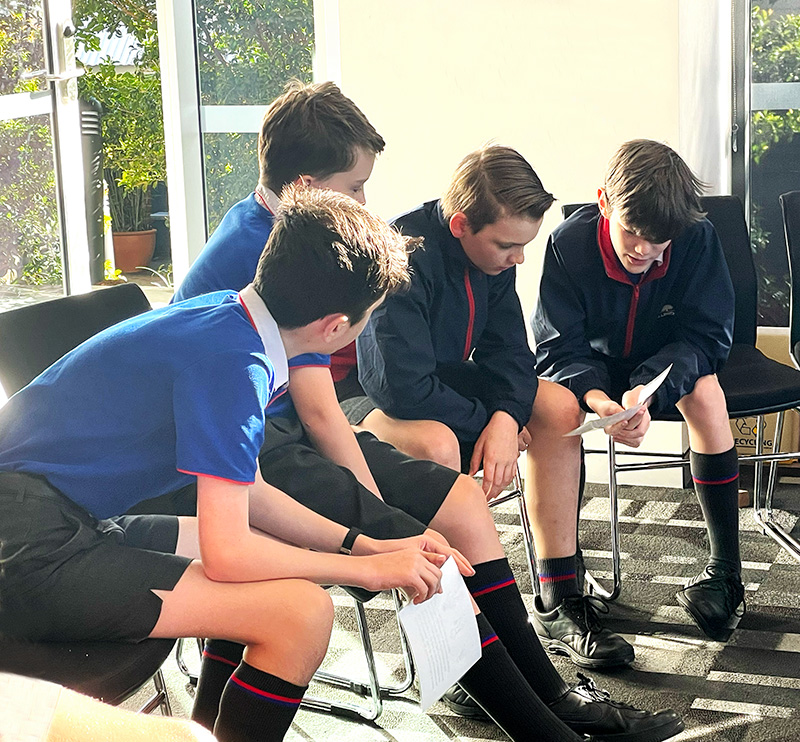
After the many interruptions of Covid, this year’s incarnation of Hillbrook’s Philosopher-in-Residence program was long-awaited and eagerly anticipated, and I’m grateful to everyone in the school community who helped to make it ultimately so very rewarding.
It was a real pleasure to return to the site of so many wonderful memories from my previous residency in 2019. The school now boasts a dedicated Philosophical Inquiry classroom, whimsically decorated by students past and present.
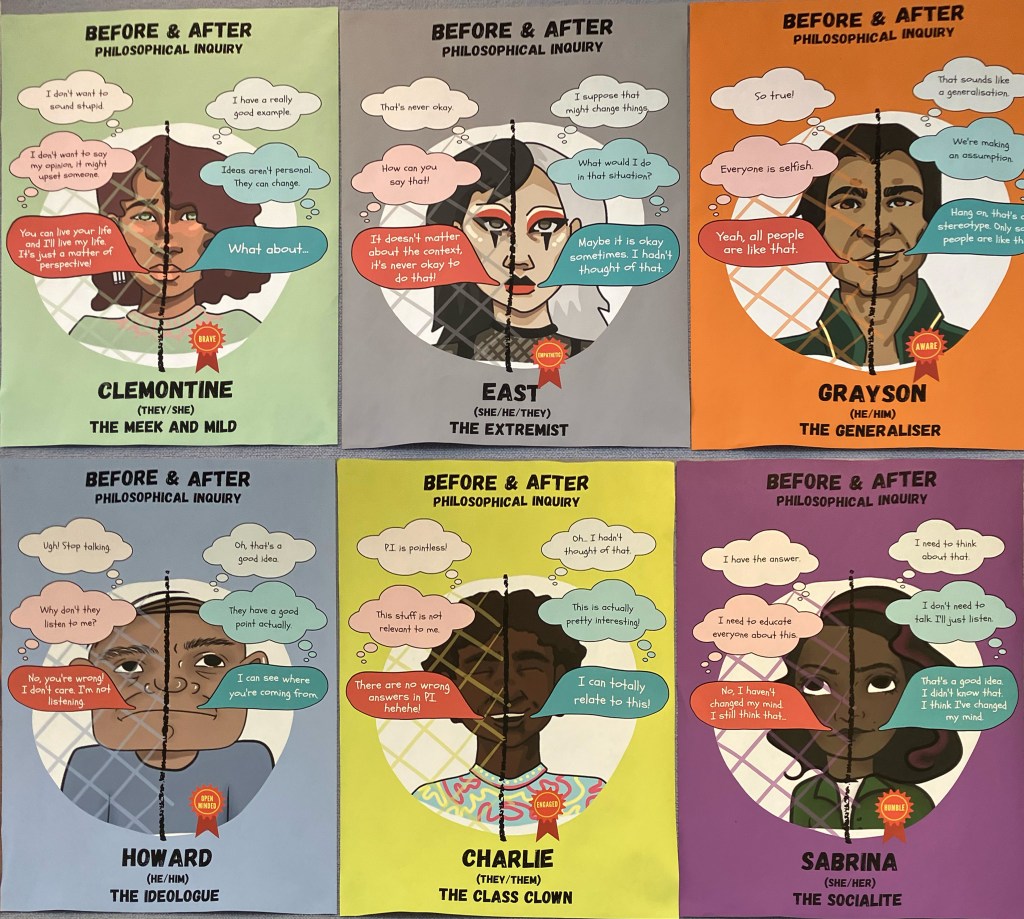
Over the course of fifteen extended collaborative enquiries, students across the year levels sank their teeth into questions like ‘Can a robot be a person?’, ‘Is corporate surveillance ethically acceptable?’, ‘Can there be truth in fiction?’, ‘Does luck exist?’, ‘Why should we value science?’, and ’Can money buy happiness?’
I congratulate the 400 students who worked attentively and courteously with their peers and who shone with insight, poise, focus, and a shared commitment to interrogating diverse views. It was a privilege to spend time with you all, and I was often agog at your self-discipline throughout our long and thoughtful sessions together.
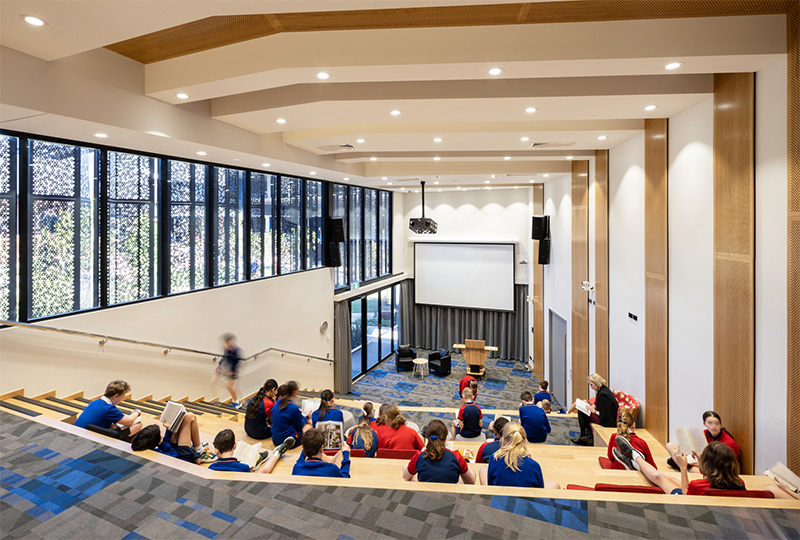
I was disappointed to miss the scheduled parents’ philosophy evening due to an untimely encounter with Covid, but at least I was able to share my workshop materials on human nature and human rights with Hillbrook’s teachers, who deftly facilitated the workshop on my behalf. Parents are reported to have plunged head-first into a series of sophisticated discussions. I hear that they asked some very difficult questions, as all good philosophers are wont to do!
I want to acknowledge the important behind-the-scenes work of all the Philosophical Inquiry teachers whose care, wisdom and persistence has fostered a true culture of thinking at Hillbrook. It was a delight to spend an afternoon with these teachers facilitating a collaborative inquiry on the subject of truth-telling in the context of dementia care. I also very much enjoyed meeting the History teachers and taking part in a philosophy-inflected discussion about historiography. The opportunity to present a session on epistemological development to teachers from several other Brisbane schools was icing on the cake, and it was a special pleasure to finally meet certain individuals in the flesh, having admired their work from afar for many years.
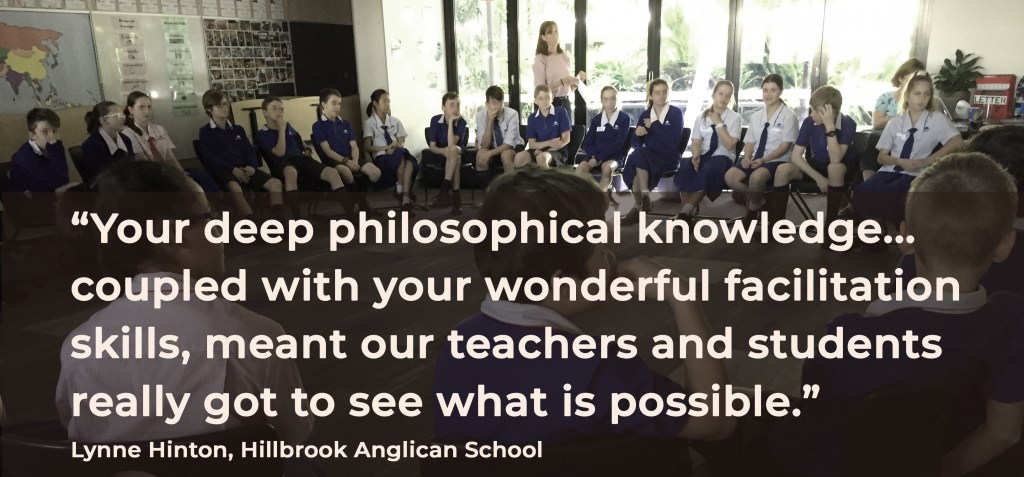
I’d like to express my appreciation to Hillbrook’s leadership team whose continued support for the Philosopher-in-Residence program enabled me to return to the school this year. Special thanks go to Amy Eberhardt for her generous hospitality and dedication in bringing this year’s program to fruition –– and to all the lovely staff who made me feel welcome at Hillbrook. It was a scintillating experience that won’t soon be forgotten!
………………………………….
The Philosophy Club works with teachers and students to develop a culture of critical and creative thinking through collaborative enquiry and dialogue.





Leave a Reply