

The podcasts I recommended in Podcasting about Post-Truth (1) and (2) raise several of the big themes underscoring my work over the past decade.
I set up The Philosophy Club in hopes of fostering young people’s intellectual autonomy, to help them, as I’ve said previously, draw their own well-reasoned conclusions; value coherence and logical consistency in the construction of their worldviews; and cleave to their beliefs with a level of confidence proportional to the amount and quality of evidence available.
What I wanted was to give young people the capacity to articulate thoughts clearly and evaluate them honestly; and the confidence to exercise independent judgement and self-correction.
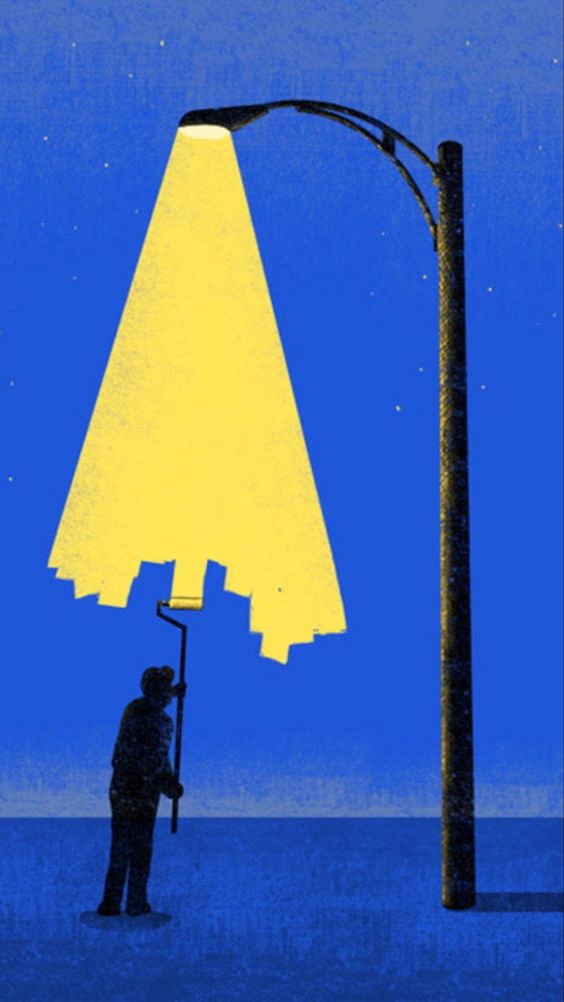
As the concept of post-truth exploded into the public consciousness and we witnessed the crumbling of shared understanding, I sharpened my focus on the value of dialogue and its challenges, the crucial importance of empathy and respect for diversity, and ways of resolving disagreements in civic spaces.
While retaining a focus on developing skills in evaluative thinking and rational judgement, I began thinking about my work explicitly in terms of encouraging young people to value and to pursue shared understanding with their peers. This is something that can occur only through the social process of argumentation, as Peter Ellerton — a leading exponent of critical thinking education — explains:
I think the problem is that we frame [public discourse] as a debate. Because the purpose of a debate is to win. And that’s not what public reasoning is about. Public reasoning is about engaging in an intellectual process of argumentation with each other, to try and determine what the truth is; to try and test our ideas against other people’s criticisms, and to help them do the same; and to collaboratively work towards some kind of solution. And in public reasoning we don’t want debates; we want arguments. [We should be saying] ‘look, here’s what I suggest we should do, here’s what my belief is; here are the reasons why I think that’s the case’. But even if we just do that, it’s not enough. Because what’s a meaningful reason to me may not be a meaningful reason to you.

“Reason can be far better understood as a social competence rather than as an individual faculty,” Ellerton argues. “And the notion of rationality, upon which any definition of critical thinking has to rest, is at root a deeply social one… We have to make meaning with our rationality together.” To really engage in public reasoning, he says, we need to find ways not merely to make our positions clear to others, but to make our reasons clear: “If we don’t take the trouble to try and make the reasoning that is sensible to us also accessible and meaningful to other people, then that’s not public reasoning, it’s just a different kind of assertion.”
As counterintuitive as it may seem, the platforms driving our hyperconnected online lives tend to divide and polarise us more than they connect and unite us. “Our social media platforms do not give us time to do that sort of social and collaborative thinking the way we wish,” Ellerton concludes. “We only have time to tweet an assertion, or to post an opinion that agrees with us. We cannot engage in that kind of social cognition which is so indicative and so important for developing good thinking skills.”

All this to say — the potential impact of our work as philosophical educators is at least three-dimensional: politically far-reaching, socially expansive and psychologically deep. It is through collaborative inquiry and dialogic argument that students learn the communication skills that will set them up for life.
It’s time to reinvigorate a comment I made after our last federal election, reflecting on what our students learn by doing philosophical inquiry together:
Rather than avoiding controversial issues as a matter of politeness, or gingerly skirting around differences of opinion, students learn to communicate across the divide with care, empathy, vulnerability and intellectual humility. We help students consider the plurality of concerns, positions and reasons they nurture. We make space for negotiating and reconciling their differences as far as possible. And this is how we begin to build strong communities; communities that are resilient to fracturing along the fault-lines of ideological difference.
………………………………….
The Philosophy Club works with students and teachers to develop a culture of critical and creative thinking through collaborative inquiry and dialogue.



 The Philosophy Club
Leave a comment