
We know that climate and ecological breakdown are eroding the earth’s capacity to support life, imperilling human security more profoundly than anything else in modern times. Systemic environmental collapse is now nothing less than an existential threat. In the words of climatologist Hans Schellnhuber, “We are now reaching the end-game, where very soon humanity must choose between taking unprecedented action or accepting that it has been left too late and bear the consequences”.
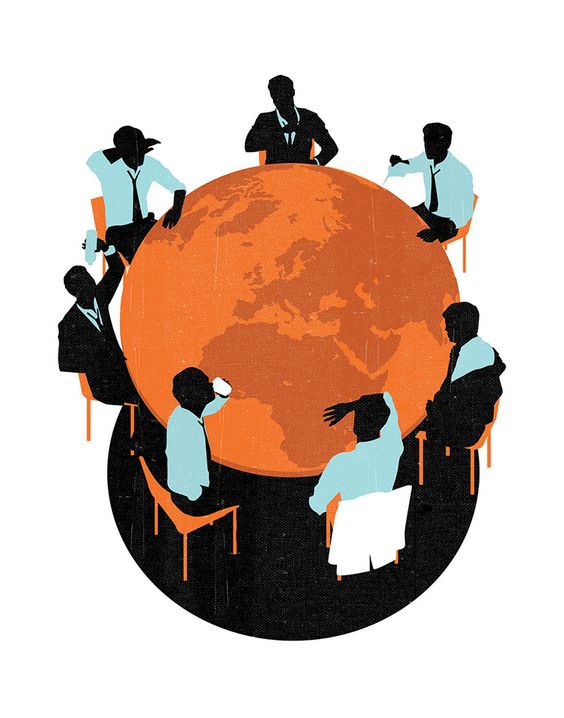
With rapid biodiversity loss and climate disruption threatening the lives of hundreds of millions of people, amplifying the threat of global conflict and risking societal breakdown, the consequences of continuing on our current path would indeed be dire. To avert a full-blown catastrophe, we must find new ways of thinking about sustainability and wellbeing, and about the consumption, pollution, exploitation, and inequality that corrode them.
In her Aeon article Philosophy Can Make the Previously Unthinkable Thinkable, ethicist Rebecca Brown celebrates the role of philosophers in offering “a counterpoint to received wisdom, established norms and doctrinal prejudice”. She points out that philosophers can contribute to shifting the ‘Overton window’ by adopting positions that are counterintuitive and outside mainstream thought; by testing arguments, identifying errors, and upholding standards of academic rigour and intellectual honesty; and by “pushing the public and political debate towards reasoned deliberation and respectful disagreement.”
As a classroom practice, philosophical inquiry makes space for intentional dialogue and deliberation, engenders mutual understanding, and facilitates the co-construction of shared visions. It fosters a range of competencies needed for civic engagement, such as encouraging students to co-operate in good faith and to build relationships based on such values as autonomy, agency, consent, trust, participation, authenticity, and self-determination. It introduces students to controversial issues, uncovers shared values, and supports nonviolent engagement with what education researcher Nancy Erbstein calls “the deep splits in values and understandings that exist in communities”. What’s more, philosophical inquiry inducts students into norms of communication that are indispensable to a well-functioning democracy – norms like attending to a wide range of voices, and responding in ways that are accountable to standards of reason and evidence. And to the extent that it asks students to consider how to address injustices in real-world situations, philosophical inquiry offers practice in just decision-making.
Philosophical arguments have long been pivotal to overturning historical orthodoxies. On this note, Rebecca Brown echoes fellow philosopher Rebecca Newberger Goldstein. Social progress has always depended on philosophical arguments, they both argue, citing examples including women’s suffrage; the prohibition of slavery, of cruel and unusual punishment, and of unjust wars; and the decriminalisation of same-sex relationships.
“This is what we have to teach our children: Even things that go against their intuition they need to take seriously,” Goldstein says in The Atlantic. “What was intuition two generations ago is no longer intuition; and it’s arguments that change it. We are very inertial creatures. We do not like to change our thinking, especially if it’s inconvenient for us. And certainly the people in power never want to wonder whether they should hold power. So it really takes hard, hard work to overcome that.”
But such change has been and can again be achieved. As the historical examples show, just because a belief is strongly and pervasively held, this doesn’t mean that it is either true or immutable. That we can continue business-as-usual without catastrophic consequences is one such pervasively held belief.
Against this backdrop, schools have an obligation to develop in children what philosopher Meira Levinson describes as “the agency…to change the world in ways that make sense from their perspective”. In the words of Talia St Clare, a 14 year old participant in our collaborative project ‘Too Small to Make a Difference?’ (co-designed with Grace Lockrobin of Thinking Space):
We didn’t create this problem but it’s our responsibility to fix it if no-one else is, because we are going to be living in the world… And also, for generations and generations to come, we don’t want the world to die; we want it to continue being a beautiful place.

………………………………….
Postscript, February 2023
Environmental anthropologist Peter Sutoris speaks about new models for schooling and environmental activism on The Sustainability Agenda podcast, episode 169: ‘Interview with environmental anthropologist Peter Sutoris on new models for schooling and environmental activism’ (January 30, 2023). Some excerpts are quoted below. A more expansive partial transcript is available here.
The climate emergency is just one manifestation of a deeper problem which is the way our civilisation relates to the natural environment, the way we think about nature as simply just a space of extraction for carrying our our instrumental goals…
[G]rassroots environmental activism… [is] really a space where I see a lot of hope: a lot of people who are thinking about these issues very deeply, who are taking action, who are creating spaces for conversation and democratic engagement around these issues…
What is the role of the education system in spreading those blueprints, either in opening up or closing down opportunities for democratic dialogue about what the future should look like?…
What is actually the point of education? Is it to reproduce society as it is? Or is it to allow people to look at society from the outside a little bit, and critique it, and think about how society could be different in the future. And I think the environmental crisis makes that task of reimagining the future very urgent…
We tend to think of activism as resistance… [but] there’s also something about activism in these spaces which is much more about simply creating spaces for people to feel heard.
[T]his space where you are treated like a citizen, not just a future citizen… it is important to listen to that. Creating these forums where people come together and have an opportunity to express their views of the future and the kinds of narratives that they think are important for society to pay attention to. A kind of validation that as an individual you are not just a cog in a machine. You are not just something that is meant to contribute to the economic growth or expanding the human capital of your country. You are a political being and your view matters, even if you’re not yet 18, even if you come from a very poor socio-economic background – still, it is important for others to listen to what you have to say… This kind of deliberation and dialogue really is key to dealing with this environmental crisis that we are in…
Opening up these conversations is not politicising in the sense of the ‘capital P’ of ‘Politicise’ where are encouraging people to join a particular political party or adopt a particular political view. It’s simply sensitising them to these conversations. And I also found that young people, children, actually can engage with these issues at a younger age than we conventionally assume…
[T]he beginning points [of the Anthropocene] that have been put forward – a lot of them have to do with colonial forms of extraction, subjugating either the natural environment and other people; seeing the environment or other people as somehow instrumental to the goals of whoever is doing the extracting and the subjugating…
Facing up to these issues can be really quite traumatic, as a young person with your life ahead of you, thinking about what that life might look like as a result of the mess that you’ve inherited from previous generations. But one thing that I’ve noticed [is that] … when you are talking about these issues in a didactic way, where you’re passing down a narrative or a blueprint or a vision for the world, that can be very depressing and it can feel like you’re paralysed, as a young person. ‘There’s no space for me to act, for me to do anything within this narrative.’ But I think if you are opening up these conversations in a way that encourages young people to truly be political beings, to realise their potential as political beings, to enter the conversation about what the future ought to be, and deploying their imagination in the process – I think that in itself helps deal with some of the apathy, or some of the hopelessness that otherwise they might experience. Because suddenly they’re in a position when they’re being listened to, they’re being taken seriously, and even if they don’t necessarily know how to achieve the kinds of futures that they’re articulating, at the very least they’re creating through imagination the possibility of something different…
Does the school simply exist to fill people’s brains with information, or helping them practise certain skills, or is it also a supportive space, a safe space to explore some of these questions, to think about strategies about what you can do as a young person, as an individual, as a collective, as a group?
………………………………….
This is the second of two posts concerning the role of philosophy in ecological citizenship education. (The first, ‘A thriving public sphere’, is here.) Parts of this post are reproduced from my 2019 article We need to shift the Overton window on the climate and ecological crisis. Here’s how.
To read more on the intersection of philosophy and ecological citizenship, check out my short pieces for ‘Young Environmental Philosophers’ here.
………………………………….
The Philosophy Club works with teachers and students to develop a culture of critical and creative thinking through collaborative enquiry and dialogue.




 The Philosophy Club
Leave a comment