
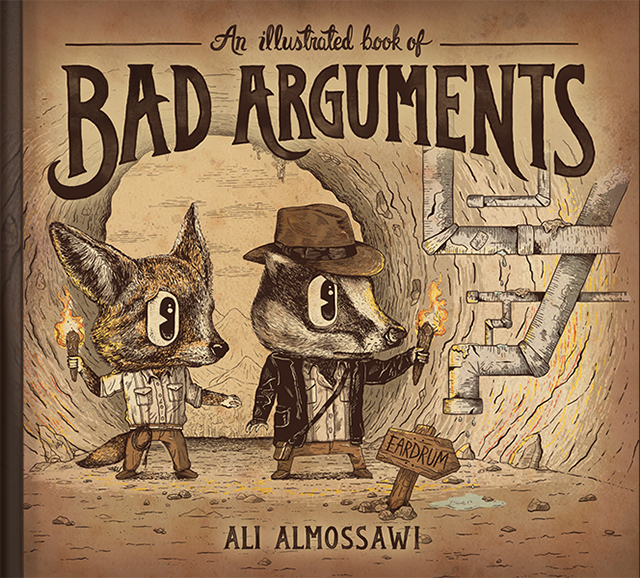
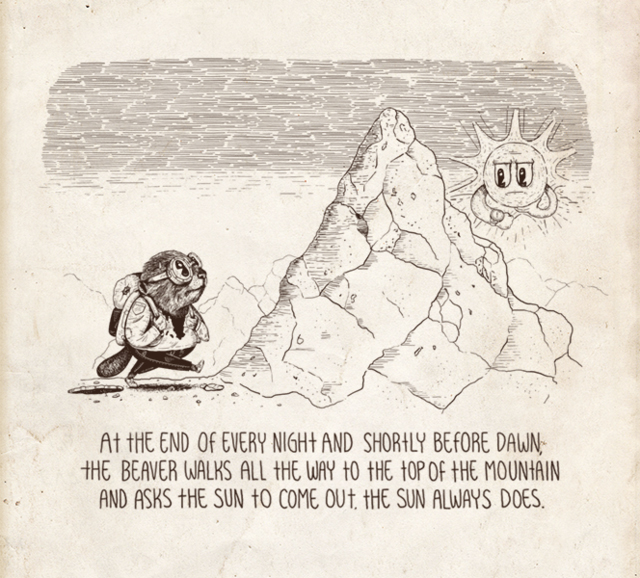
Interested in a quirky picture book for grown-ups? Take a look at An Illustrated Book of Bad Arguments by Ali Almossawi, with woodcut-style illustrations by Alejandro Giraldo. In a bold attempt to fill a gap in the popular literature on critical thinking, Almossawi uncovers 19 errors of reasoning in a series of appealingly-presented vignettes.
Well-produced and charmingly illustrated, An Illustrated Book of Bad Arguments presents itself as an accessible entrée into critical thinking for the uninitiated: a gift book or whimsical collectible for a thoughtful readership. The popularity of the online version of the book is a testament to how unusual and exciting it is to see material on critical thinking presented in a genuinely creative way. The often idiosyncratic examples in Bad Arguments – and the logical fallacies themselves – are thought-provoking teasers that whet my appetite for a deeper understanding of where arguments go wrong.
Pervading the book is a sincere attempt to draw out the practical relevance of informal logic to our everyday lives. It’s part of a larger mission to improve reasoning skills in the general public. And that mission is motivated by a belief that broader and more intelligent participation in public debates, more subtle articulation of arguments and more sensitive consideration of alternative views will eventually lead to more sophisticated and civic-minded policy positions. As a step in this direction, Almossawi seeks to improve his readers’ skills in critical thinking and cogent reasoning by drawing attention to the various characteristics of good arguments: precision, rigour, clarity, consistency, coherence, relevance and completeness.
Where Bad Arguments aims high, however, I think it misses the mark in several respects. My in-depth review published at Metapsychology Online Reviews sets out a critique. But whatever the book’s shortcomings, I want to celebrate its success in stimulating curiosity – and I look forward to seeing many more books on critical thinking designed in such an innovative and attractive way.
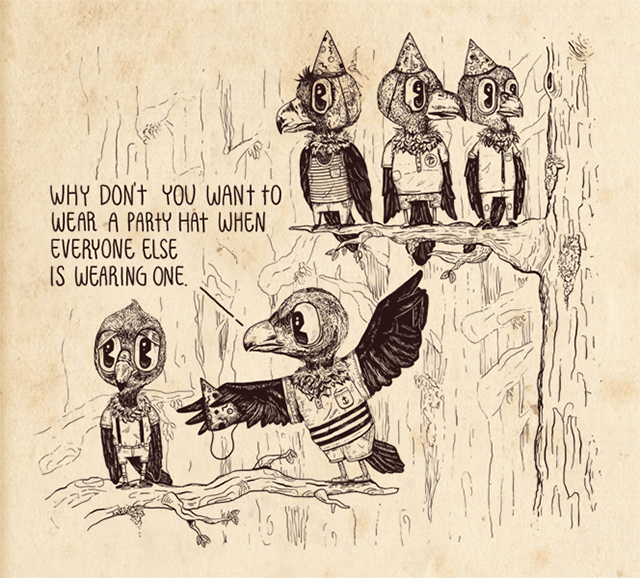
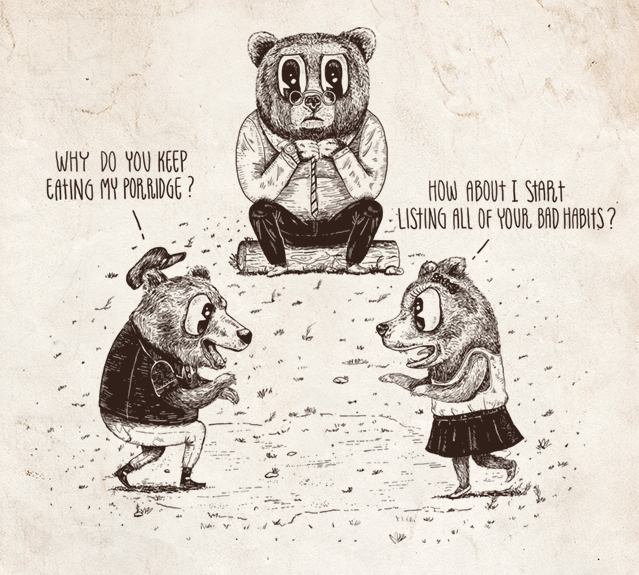
You can take a look at some illustrations from the book below and read my full review for Metapsychology Online Reviews.



The Philosophy Club works with teachers and students to develop a culture of critical and creative thinking through collaborative enquiry and dialogue.
.




 The Philosophy Club
Leave a comment