

‘Involuntary curiosity’ is George Loewenstein’s term for curiosity that arises spontaneously, when you’re inadvertently exposed to ‘curiosity-inducing stimuli’. Loewenstein, an educator in behavioural economics, regards curiosity as a knowledge-gap phenomenon: you notice a disparity between what you know and what you want to know, and this gives rise to a sense of deprivation, which is just what we call curiosity.
Feeling deprived of knowledge is an effective inducement; it powerfully incentivises you to seek the information you’re missing. This is what makes curiosity an intense experience. A sudden, unbidden urge to know propels learning. In the classroom, it can rouse students from their torpor and upend the monotony of a regular school day.
Yet curiosity is also a transient experience, and its satisfaction is often disappointing—as you may have noticed if you ever learned exactly how a master illusionist performs a trick. Discovering the banality of how it’s done is deflating. The trick truly is better when you don’t know how it works. So, counterintuitively perhaps, filling a particular knowledge-gap—dissolving the mystery—can actually kill curiosity.

It might seem that this transient nature of curiosity is a curse for teachers, hampering our best efforts to engage our students. Think of all the efforts we make to capture their interest, only to lose it over and over again—it’s like trying to gain momentum while riding over an endless series of speed bumps. But those of us who teach philosophical inquiry are lucky enough to ride on a flat road with a tail-wind, because deeply contestable questions provoke a curiosity that’s rarely satisfied. (In fact, one philosopher describes this kind of curiosity as an itch without a scratch.)
Loewenstein identifies several kinds of knowledge gap that can induce involuntary curiosity. Of these, I think the following ones are especially useful to bear in mind when selecting or designing philosophical inquiry stimuli:
1. Posing a question or presenting a riddle or puzzle.
2. Exposing students to a sequence of events with an unknown resolution (especially when students make a prediction of the outcome, in which case curiosity about the outcome is combined with curiosity about whether their predictions were correct).
3. Violating expectations, thereby triggering the search for an explanation.
No doubt every philosophical inquiry practitioner poses questions and presents philosophical puzzles, and I expect we all present or otherwise share narratives that, to a greater or lesser extent, keep students guessing. But the third kind of knowledge gap—violating expectations—is perhaps less frequently harnessed.
I’ve written (in Combustible Philosophy) about the value of activating shock, surprise, and comic amusement —among other emotional states—by means of well-chosen philosophical stimuli. Mary Helen Immordino-Yang’s observation on this point remains acutely relevant: without students’ emotional engagement, it’s “neurobiologically impossible [for them] to build memories, engage complex thoughts, or make meaningful decisions.” With this in mind, many of my stimuli are deliberately designed to violate expectations.
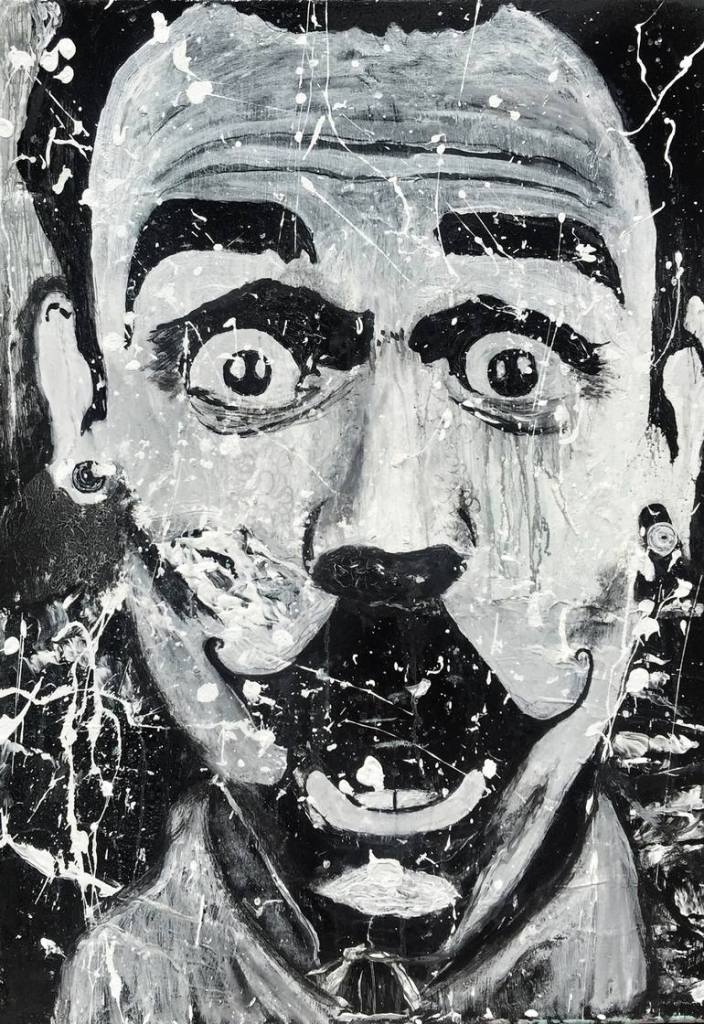
The man who surrenders his free will to a stranger. The blind visual artist who perceives light with her tongue. The victim of a violent hate crime who becomes a staunch advocate for his attacker’s freedom. The plants that engage in associative learning and decision-making. The gorilla that invents ingenious new signs in American Sign Language. The heart transplant recipient who discovers, post-surgery, that her tastes have changed to match those of her donor. The chatbot that accidentally becomes misogynistic. Archaeological evidence that corresponds with beings previously suspected to be mythological. These are some of the expectation-violating phenomena embedded in philosophical stimuli that I present to students for their consideration, analysis, and argumentation.
In my post The Real-Life Truman Show, I explain how my curation of stimuli is informed by a desire not just to activate emotions, but also to induce perplexity, challenge intuitions, ignite controversy, and elicit reasoned argument (my five desiderata for philosophical stimuli). In that post, I also describe my high school workshop on the topic of therapeutic deception in the context of dementia care, and illustrate how its design responds to the five desiderata. My posts Flint and Stone and The Jazz describe two more of my high school philosophy workshops: ‘So Entitled’ on the topic of non-human rights, and ‘Stuck in a Loop’ on the topic of free will. Through these examples, I demonstrate the impact of combining individual stimuli in novel ways—for instance, in a Provocation-Complication sequence—in order to foreground philosophical complexity and nuance.
I set the bar high: I want my workshops to be captivating and immersive, as well as nurturing, enlightening and galvanising. I’ve made many of my workshop materials freely available because I want to proliferate the experience of involuntary curiosity, something I believe every student deserves.
Postscript, 2/2/25
Writing about how intrinsically-motivating environments arouse and then satisfy curiosity, Thomas Malone writes:
Berlyne (1960, 1965, 1968) … has proposed the rudiments of a theory emphasizing concepts like novelty, complexity, surprisingness, and incongruity… however, that there are limits to the amount of complexity people find interesting…
Berlyne … claims that the principal factor producing curiosity is what he calls conceptual conflict. By this he means conflict between incompatible attitudes or ideas evoked by a stimulus situation. For example, imagine someone who believes that fish cannot survive outside of water and then hears about a fish (the mudskipper) that walks on dry land. Conceptual conflict, and thus curiosity, will be induced…
[Malone] proposes a cognitive motivation to bring the three qualities of completeness, consistency, and parsimony to all knowledge structures… Berlyne’s “conceptual conflict” would be called a “lack of consistency” in the new theory.
……………………………………….
The Philosophy Club, based in Melbourne, works with students and teachers to develop a culture of critical and creative thinking through collaborative inquiry and dialogue.



 The Philosophy Club
Leave a comment