
Reasoning Through Mysteries #3: A philosophical inquiry workshop on conspiracy culture and false belief
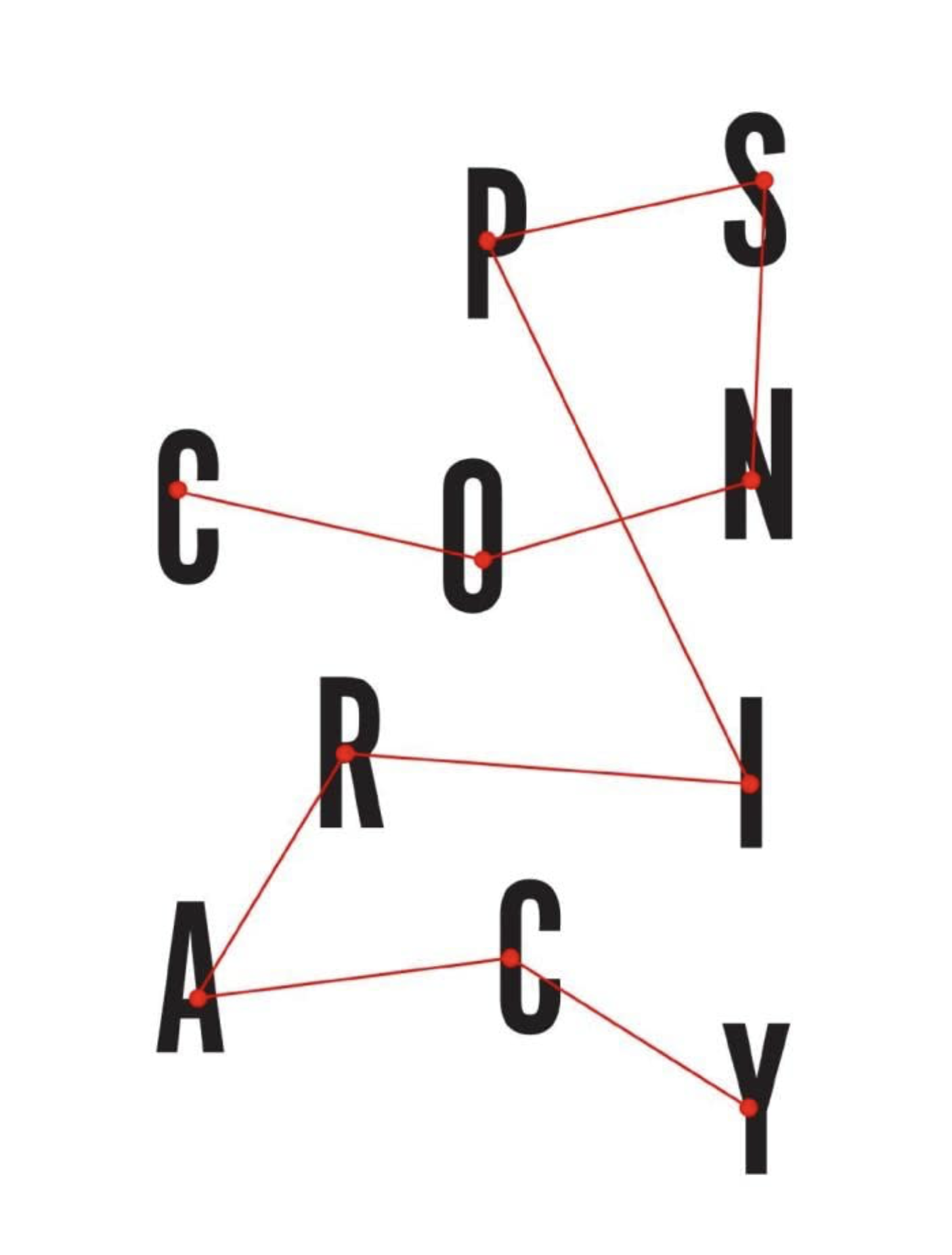
Image designed by Peter Herbert and Agustin Chung, from the cover of Michael Shermer’s book Conspiracy
Scroll down for free workshop materials!
This workshop engages participants in a series of compelling epistemological questions relating to conspiracy thinking. Segments include:
- An analysis of the nature of false conspiracy theories, an investigation of people’s motivations for believing them, and an acknowledgement of the rare occasions when conspiracies turn out to be true (drawing on the work of Naomi Klein).
- Video clip: the experience of Amber Dawn, a young woman who for six months was unaware of a squatter living in her attic, despite noticing a number of oddities that she was inclined to explain away.
This workshop tackles questions including:
- How should we help people resist conspiracy thinking?
- What criteria should we use to assess the credibility of conspiracy claims?
- How should we make decisions when we have only circumstantial evidence?
- Is it a problem that emotions shape our reasoning?
- Should we try to avoid becoming more invested in our beliefs over time?
- How can we determine whether our assumptions are reasonable or need revising?
- How do confirmation bias and post-hoc rationalisation affect our judgement?
- What role do scepticism and epistemic humility play in the quest for truth?
- Does talking to other people more often help or hinder your search for understanding?
- How should we decide when (if at all) to trust our instincts as a source of knowledge or guidance?
This workshop is grounded in social epistemology, a field of study which recognises that knowledge is socially-situated, and that our beliefs are influenced by our social context.
––––––––––––––––––––––––––––
The following workshop materials are shared under Creative Commons license CC BY-NC-SA (Attribution-NonCommercial-ShareAlike) for all original material. (Materials from other sources are clearly credited in the runsheet.)
- Runsheet – A Shady Cabal (100 mins)
- Slideshow (PDF copy): A Shady Cabal (video clip not included – to view video clip, click here, or use hyperlink indicated on the runsheet)
- Resources to print and guillotine:
- Conspiracy theory susceptibility factor cards (for student groups)
- Conspiracy theory cards (for student groups)
- Facilitator’s cards to share during discussion about distinguishing real from baseless conspiracies (for facilitator’s use)
––––––––––––––––––––––––––––
This work is available free of charge, so that those who can’t afford it can still access it, and so that nobody has to pay before discovering it’s not what they are really seeking. But if you find it valuable and you’d like to contribute whatever easily affordable amount you feel it is worth, please leave a donation via Paypal below.

In appreciation,
Michelle Sowey
Co-Founder and Managing Director
The Philosophy Club



 The Philosophy Club